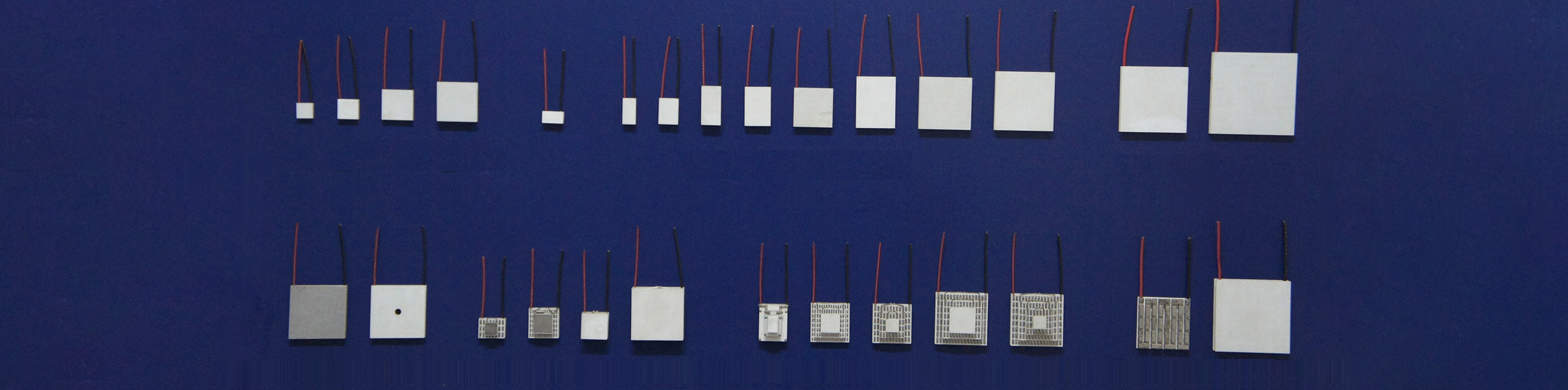
Driven by the rapid expansion of AI computing power requirements, demand for micro-thermoelectric coolers (Micro-TECs) has surged significantly in 2026. As AI-driven data centers increasingly rely on high-bandwidth optical interconnects, tens of thousands of optical modules per facility now transmit massive volumes of data at near-light speeds. This growth is fundamentally rooted in escalating thermal management challenges associated with advancing compute density—particularly in AI infrastructure—where precise temperature control has become indispensable for system reliability, signal integrity, and device longevity. These challenges manifest across four key application domains:
1. Long-haul backbone transmission: Dense wavelength division multiplexing (DWDM) optical modules—capable of transmission distances exceeding 80 km—require Micro-TECs(micro thermoelectric modules, Micro peltier modules) to maintain laser diode temperature stability within tight tolerances, thereby preventing wavelength drift and ensuring spectral channel isolation in core networks.
2. High-performance data centers: In AI training clusters and cloud computing facilities, high-integration photonic integrated circuits (PICs) generate substantial localized heat fluxes. Micro-TECs, Micro thermoelectric cooling module,Micro peltier elements provide dynamic, real-time thermoregulation to sustain optimal operating temperatures for compute and interconnect subsystems.
3. 5G/6G telecommunications infrastructure: Outdoor base stations operate under extreme ambient temperature variations (e.g., −40 °C to +85 °C). Micro-TECs,Micro peltier devices, micro-peltier coolers enable bidirectional thermal regulation—cooling during peak ambient heat and heating during sub-zero conditions—ensuring uninterrupted optical module functionality across all operational environments.
4. Coherent optical communication systems: In metropolitan, wide-area, and submarine fiber-optic networks, coherent transceivers impose stringent phase and polarization stability requirements on optical signals. Micro-TECs, Micro -peltier modules,micro thermoelectric coolers deliver sub-millikelvin-level temperature stability—critical for maintaining coherent detection fidelity and minimizing bit error rates (BER).
5. Industrial and mission-critical communications: In harsh environments—including industrial automation, surveillance systems, and aerospace applications—Micro-TECs ,micro peltier elements ensure robust optical module performance across extended temperature ranges (−40 °C to +105 °C), supporting long-term operational reliability.
I. Precision thermal control as the primary growth driver
High-speed optical modules—especially those operating at 800G, 1.6T, and emerging 3.2T data rates—are highly sensitive to thermal perturbations. Laser diodes exhibit intrinsic temperature dependence, triggering cascading performance degradations:
• Wavelength drift: Distributed feedback (DFB) lasers, for instance, exhibit a typical wavelength–temperature coefficient of ~0.1 nm/°C. Over the commercial operating range (0–70 °C), this translates to up to 7 nm of spectral shift—exceeding channel spacing in many DWDM systems and inducing inter-channel crosstalk and BER escalation.
• Optical power instability: Temperature fluctuations directly modulate laser threshold current and slope efficiency, resulting in output power variance and degraded signal-to-noise ratio (SNR).
• Accelerated device aging: Prolonged operation outside the optimal thermal envelope accelerates degradation mechanisms—including facet oxidation and quantum well defect proliferation—reducing mean time to failure (MTTF).
Given these constraints, next-generation AI-optimized optical modules mandate temperature stabilization accuracy of ±0.05 °C or better—requirements that only Micro-TECs ,micro peltier devices, micro TEC modules ,micro thermoelectric modules can satisfy within compact form factors (<3 mm² footprint) and sub-100 ms response times. Consequently, virtually all medium- and high-end 800G+ modules integrate closed-loop thermal management systems comprising Micro-TECs,Micro-TEC modules,micro peltier devices,micro TE modules precision thermistors, and dedicated temperature control ICs—effectively “locking” laser junction temperature to within ±0.02 °C of setpoint.
The functional value proposition of Micro-TECs, micro thermoelectric cooling modules, micro thermoelectric elements in optical modules comprises three interdependent dimensions:
• Spectral stability: Active suppression of wavelength drift ensures channel orthogonality, eliminates crosstalk, and maintains low BER under dynamic thermal loads;
• Signal fidelity optimization: Adaptive cooling/heating compensates for ambient and load-induced thermal transients, stabilizing optical power and improving modulation depth and extinction ratio;
• Lifetime extension: Efficient heat extraction mitigates thermal stress accumulation, delaying material degradation and reducing field failure rates by up to 40% (per accelerated life testing data).
II. Exponential scaling of Micro-TEC,micro peltier modules deployment per AI server
Contemporary AI training servers typically integrate 16–32 high-speed optical modules—each requiring 2–3 Micro-TECs, micro thermoelectric modules(micro thermoelectric cooling modules) depending on data rate, packaging architecture (e.g., co-packaged optics, CPO), and thermal design margin. As such, a single high-end AI server may incorporate 40–90 Micro-TECs(Micro-peltier elements)—representing a 5–10× increase over conventional enterprise servers. With global 800G/1.6T optical module shipments projected to exceed 15 million units annually by 2026, aggregate Micro-TEC demand for petabyte-scale AI clusters is expected to reach tens of millions of units per year.
III. Emergence of hybrid liquid cooling + Micro-TEC (micro thermoelectric cooling modules) architectures
As next-generation AI accelerators—including NVIDIA’s GB300 platform—push GPU power envelopes beyond 1,000 W per die, air-cooling solutions have reached fundamental thermodynamic limits in high-density rack deployments. Liquid cooling has therefore become the de facto standard for rack- and chassis-level thermal management. Within this paradigm, a hierarchical cooling strategy has emerged: liquid cooling handles bulk heat removal at the system level, while Micro-TECs (micro peltier coolers)perform fine-grained, chip-level thermal regulation—enabling unprecedented thermal uniformity across photonic and electronic dies. This synergistic architecture positions Micro-TECs, micro-thermoelectric modules as a critical enabler—not merely an auxiliary component—in AI compute thermal stacks.
IV. Accelerated domestic substitution amid global supply constraints
Historically, >80% of high-precision Micro-TECs ,Micro thermoelectric devices(Micro TEC modules) were supplied by Japanese manufacturers. However, surging AI-related demand has stretched lead times for incumbent suppliers—some exceeding 26 weeks—and constrained capacity allocation to strategic customers. Domestic Chinese TEC modules manufacturersare capitalizing on this inflection point: accelerating AEC-Q200 and Telcordia GR-468 qualification cycles with Tier-1 optical module vendors, scaling monthly production capacity to multi-million-unit levels, and achieving performance parity (±0.03 °C stability, >1.2 W/mm² cooling density) with leading international counterparts.
In summary, the confluence of AI compute density breakthroughs, bandwidth escalation, and photonics integration imperatives has elevated Micro-TECs(Micro peltier modules) from peripheral thermal components to foundational infrastructure elements. They now serve as an “invisible necessity”—a silent yet indispensable determinant of AI data center uptime, computational throughput, and long-term total cost of ownership.
Beiing Huimao Cooling Equipment Co.,Ltd. with over three decades of expertise in the design and manufacturing of micro-thermoelectric cooling modules,Micro-TECS , our company has successfully developed a diverse portfolio of miniature thermoelectric cooling solutions tailored to international clients’ specifications. These products are widely deployed across aerospace, medical instrumentation, optical communications, and precision industrial applications. We welcome strategic collaboration with global partners for co-engineering and joint development of next-generation thermoelectric cooling technologies.
TES1-00401T200 Specification
Hot side temperature: 50 C,
Imax: 0.8A,
Vmax: 0.48V
Qmax:0.3W
Delta T max:76 C
ACR:0.5 Ohm
Size : 2.3×1.1×0.95mm
Post time: Aug-11-2026


